Submerged Logging

Recovery of sunken logs from submerged State lands

River clogged with cut logs

Long ago, timber companies used lakes and rivers to transport their logs to a sawmill. The sawmills also created “hot ponds” at the mill to pre-soak their logs to clean and thaw them before sawing. Unfortunately, some of these logs sank to the bottom of the water body and have remained there to this day. Logs that sank in deep water or were buried in the mud have been very well preserved and are sought after today for their unique old growth characteristics.

By law, these logs are owned by the state of Wisconsin if they are located on submerged State lands (§ 170.12Arrow icon indicating link will open an external site page in a new tab). Should an individual or company wish to recover these sunken logs they must get a permit from BCPL and they must pay the State a fee for the logs that are recovered. Permits also require approvals from the DNR Waterways Program, the State Historical Society, and possibly the U.S. Army Corps of Engineers - if they have jurisdiction.

Information on the permit application processPDF icon indicating link will open a PDF file in a new tab

Complete Application for a Permit to Remove Sunken LogsPDF icon indicating link will open a PDF file in a new tab

BCPL
7271 Main St., P.O. Box 277
Lake Tomahawk, WI 54539
715-277-3366

A Little Submerged Logging History
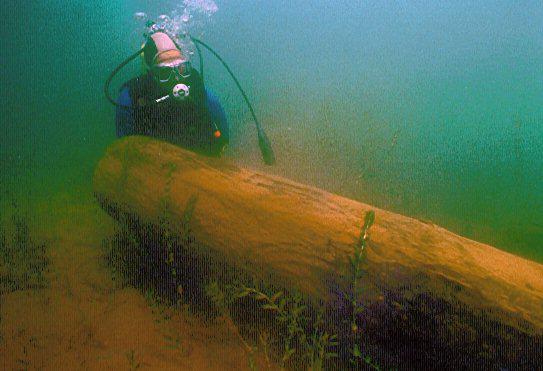
SCUBA diver examining the end of a large log underwater

  • It is true that if there are any hardwood logs that have been submerged for a long time in deep water, the logs may have considerable value for musical instrument and furniture makers.
  • Over 30 years ago, many people applied for permits to recover logs from virtually every water body where submerged logs might be found.
  • Unfortunately, very few submerged logs of any value were ever recovered pursuant to this program.
  • Every entity that received a submerged logging permit has gone out of business with most of them filing for bankruptcy. The operating expenses of those entities were very significant but their revenue was nonexistent.
  • The permitting path is lengthy and requires approvals not just from BCPL but also from the DNR and the State Historical Society and, depending on what body of water, the US Army Corps of Engineers.

It is strongly recommended that you receive a preliminary approval from the DNR as well as from the State Historical Society prior to applying for a permit.

Wisconsin DNR Waterways ProgramArrow icon indicating link will open an external site page in a new tab

Wisconsin Historical Society: statearcheologist@wisconsinhistory.orgEmail icon indicating link will open the user's default email handler

US Army Corps of Engineers - St. Paul District: USACE_Requests_WI@usace.army.milEmail icon indicating link will open the user's default email handler